Ongawa
By Lucas Li
How can a game amplify the power of music and give creators a stage where their compositions become dynamic, playable art? As a continuation of Virtuosos, Ongawa is a work-in-progress mobile rhythm game that blurs the line between player and musician, combining storytelling, gameplay, and creation into one seamless experience.
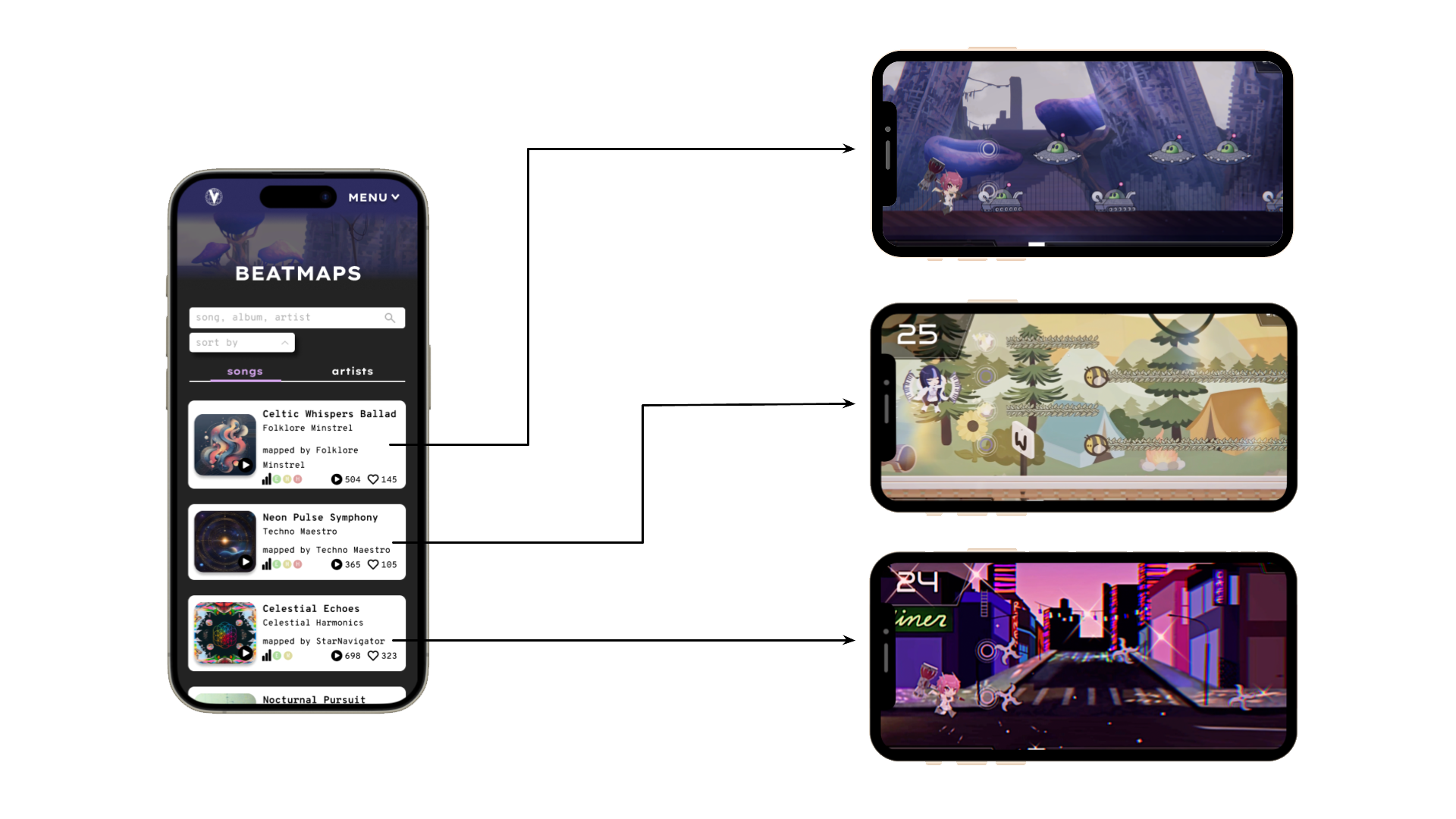
Ongawa places music at its core, transforming each composition into a rich narrative adventure. Unlike traditional rhythm games that use popular music to promote the game itself, Ongawa is a unique video game that supports independent musicians by showcasing and monetizing their work. It empowers musicians to craft immersive game levels and allows players to experience music in new, interactive ways.
📍 Status: In Progress — This project is actively being developed. Information may change as the project evolves.
Inspiration and Vision
Ongawa was born from the belief that music, particularly from indie artists, deserves a platform where creativity and artistry are celebrated without the constraints of mainstream pressures. The vision is to create a space that not only supports indie musicians in gaining recognition but also offers indie music fans and rhythm gamers a rich, engaging experience.
Challenges Faced by Indie Musicians
Indie musicians often face significant hurdles when it comes to gaining visibility and generating sustainable income. While mainstream artists can rely on large labels and vast promotional budgets, independent musicians frequently find themselves fighting for attention in an overcrowded digital space.

Darren, a tenor singer in Take It SLO, articulates this frustration when he says:
“We have 3,000 monthly listeners on Spotify, but it’s frustrating. I know that there’s a lot of smaller creators that have fantastic music that isn’t shown…because of the algorithm.”
This challenge is exacerbated by the limitations of digital platforms, where algorithms often prioritize mainstream music over smaller, independent artists. The focus of these platforms is not necessarily on discovering new talent but rather on maintaining engagement through already popular music. As a result, many talented indie musicians are left in obscurity despite producing exceptional work. As Darren notes:
“Ultimately us posting our stuff online isn’t as much for money as it is for soliciting our group.”
For many independent musicians, it’s not about financial gain but about building a community of like-minded listeners who appreciate their unique sound.
Challenges Faced by Indie Music Fans
For indie music fans, the landscape is equally challenging. With major streaming platforms dominated by mainstream music, discovering new, unique indie artists is often an overwhelming task. Ali, an indie music fan, reflects this sentiment when she shares:
“I feel like a lot of mainstream artists go off of each other, okay, whereas smaller artists kind of are more individual in their thing, and they don’t personalize, yeah. I feel like mainstream also produces more for the money of the music, whereas the mainstream or the like not, they’re doing it for the artists.”
The lack of personalized discovery in mainstream streaming apps leaves indie music fans disconnected from the artists they truly resonate with. The issue extends beyond discovery; it also affects accessibility. Rising costs and inflation have made attending concerts increasingly difficult, especially for those who want to support indie musicians directly. This gap in access to indie music experiences has created a void that Ongawa seeks to fill.
Challenges Faced by Rhythm Gamers
For rhythm gamers, the challenge often lies in the limited variety of songs available in most games. Players may find themselves bored or disengaged after repeated playthroughs of the same tracks. This lack of variety can stifle excitement and diminish the immersive experience that rhythm games are known for. Ongawa recognizes that this is an opportunity to offer a wider selection of indie music in rhythm game formats, bridging the gap between indie musicians and the gaming community.
Furthermore, rhythm gamers often lack a strong sense of community within the games they play. While competitive environments can foster engagement, they sometimes fail to create spaces for collaborative and supportive interaction. Ongawa envisions a platform where rhythm gamers can not only engage with diverse music but also connect with fellow players in a meaningful way, creating a dynamic, community-driven space.
The Ongawa Solution
By merging the worlds of indie music and rhythm gaming, Ongawa offers a fresh and innovative approach to the challenges faced by these three groups. Indie musicians gain a platform where their work is celebrated for its originality, and fans are given the opportunity to discover new sounds that resonate with their tastes. Rhythm gamers are introduced to a greater variety of music, including indie tracks, while fostering a vibrant, collaborative community.
In the words of Ali, indie music fans want to “explore new unique indie music,” and Ongawa’s platform offers exactly that—a space where the artistry of indie musicians is not overlooked, and where fans and gamers alike can immerse themselves in a truly creative and engaging experience.
Market Opportunity
The gaming industry is thriving, with the US rhythm game market alone generating over $328 Million annually. Yet traditional rhythm games suffer from repetitive gameplay and limited music variety, leaving a gap between the gaming community and independent musicians who lack exposure opportunities.
The Problem:
- Indie musicians rely on streaming services like Spotify and Apple Music but earn almost nothing—often not enough to cover production costs
- Promoting music through standard channels (social media ads, PR services, music videos) is prohibitively expensive
- Indie musicians need alternatives for revenue and exposure that don’t require large upfront investments
The Ongawa Solution:
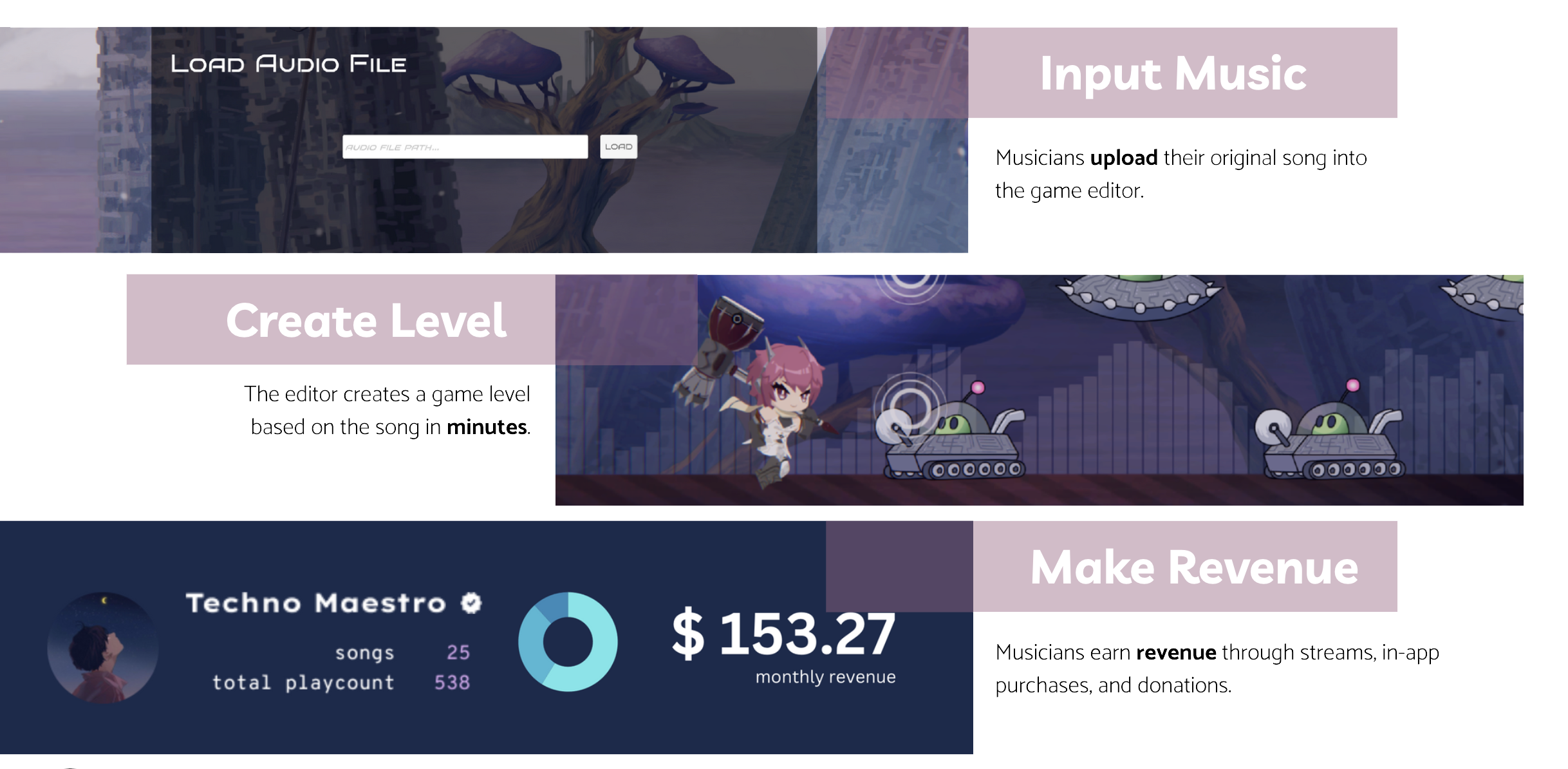
Think of Ongawa as a “Spotify playlist” where song tracks created by musicians are transformed into interactive game levels. Each musician-created level is like a gamified song where players tap, swipe, and hold to the beat of the music, experiencing the music in a whole new way—similar to Guitar Hero.
Unlike traditional rhythm games where level creation takes days or weeks, Ongawa’s proprietary algorithm generates a fully playable game level within minutes. A musician can create a game level in the time it takes to brew a morning coffee.
Gameplay Mechanics
Ongawa is a rhythm video game with RPG elements where players command diverse characters to conquer levels. Character dialogues integrate into the levels, conveying musicians’ messages to players.
Characters & Tracks
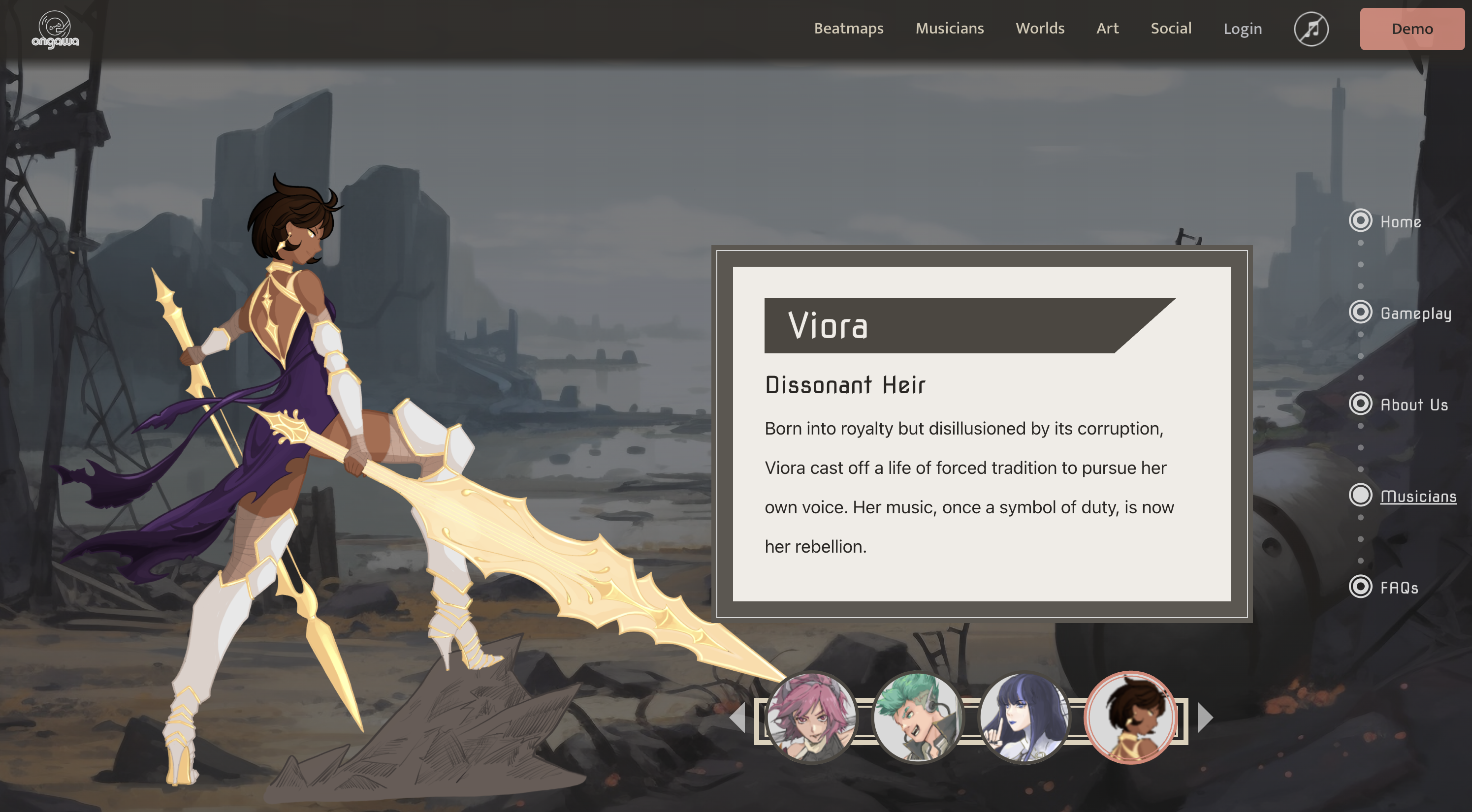
In Ongawa, players control a group of unique characters with inherent stats like strength, dexterity, and luck. Each character corresponds to a track, and the number of characters in a level determines the number of tracks. Tracks represent musical elements and their stats impact gameplay.
- Strength: Impacts track health; weak tracks can be destroyed.
- Dexterity: Affects hit accuracy.
- Luck: Can ignore misses and grant bonus scores.
Note System
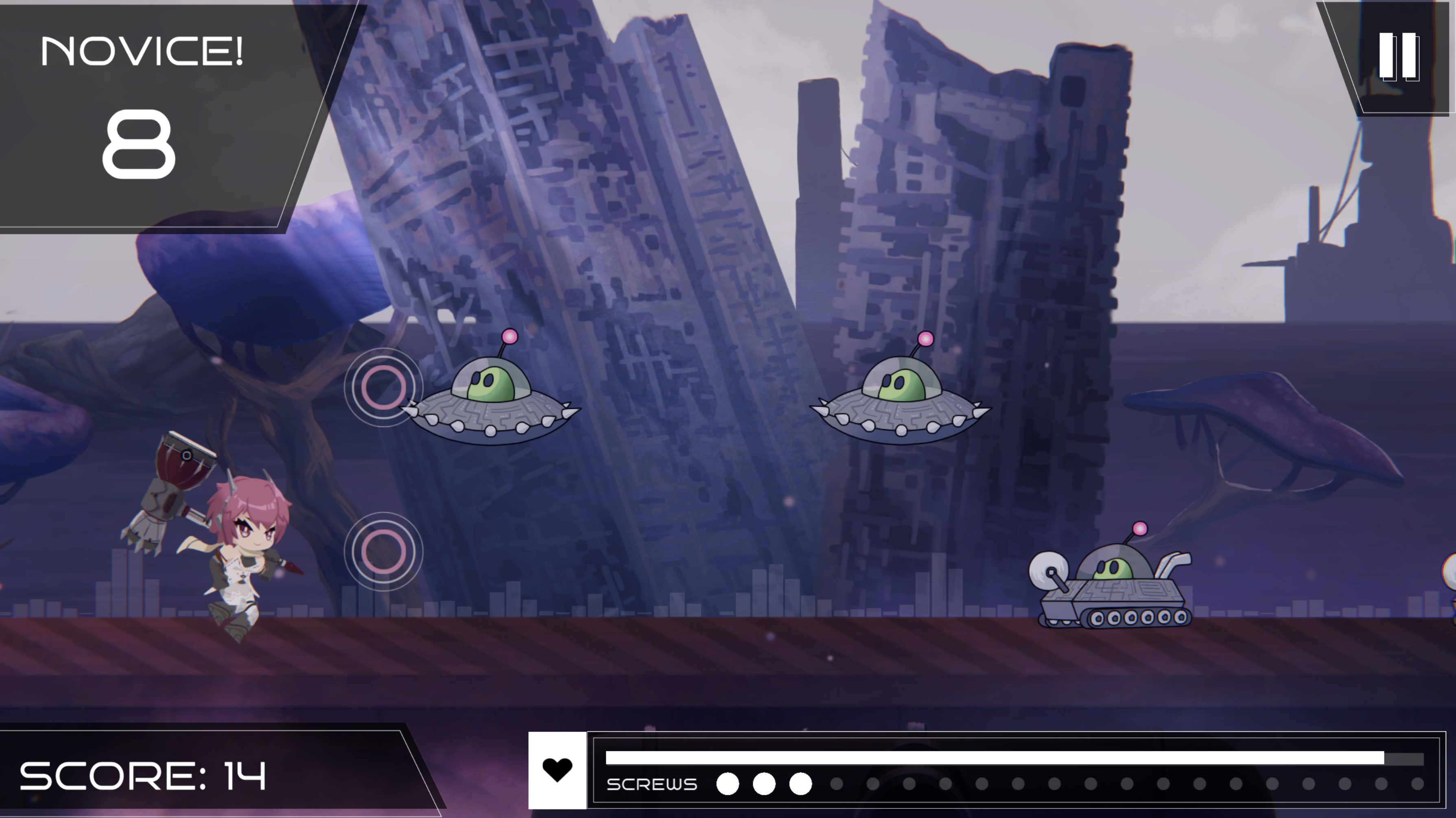
Notes approach from the right side of the screen, and players must press an attack button when notes align with trigger marks on each track. There are various note types, including touch, directional flick, hold, slide, and spam. Failing to hit a note damages the player party, and if health reaches zero, it’s game over.
Difficulty & Missions
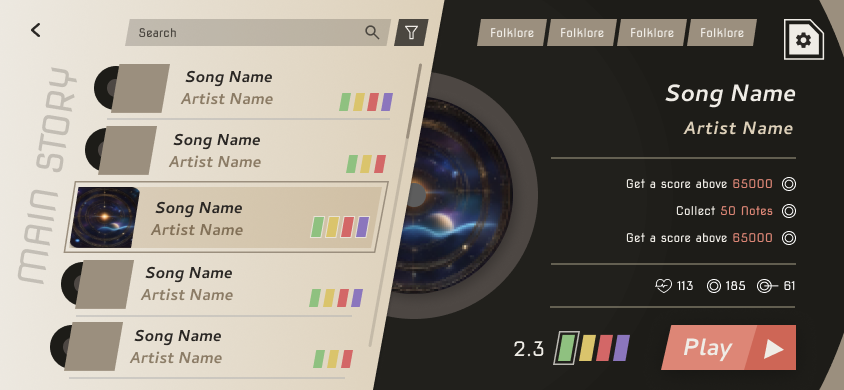
Game levels can be unlocked through gameplay or song pack purchases, each with different difficulties, with harder ones unlocked by completing previous levels. Each level has missions, completing which unlocks items and achievements.
Abilities
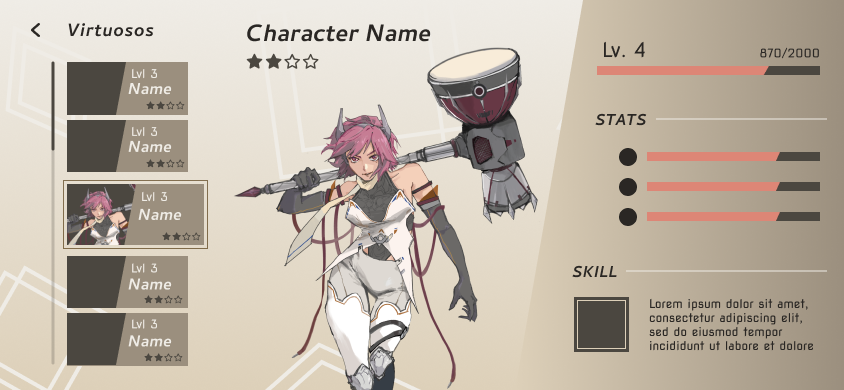
Ongawa offers personalized music discovery while integrating strategy-driven gameplay — players can attach unique abilities to characters! For example, unlocking bonuses like extra combo scores, debuff avoidance, healing on perfect hits, or revival. To maintain fairness for hardcore or ranked players, this feature is disabled in competitive modes.
Additional Features
- Adventure Mode: Free-to-play with game-made/musician-made tracks and limited customization.
- Worlds Mode: Curated, sequential levels mirroring musician albums. Subscription or individual purchases for access.
- Multiplayer Mode: Real-time coop (up to 4 players) with competition and collaboration modes. In competition mode, players lose score if their strength drops to zero. In collaboration mode, all players must stay alive to complete the level, with rewards based on total score.
Core Technology
Ongawa’s technical prowess lies in its robust systems:
In-Game Editor with AI Beatmap
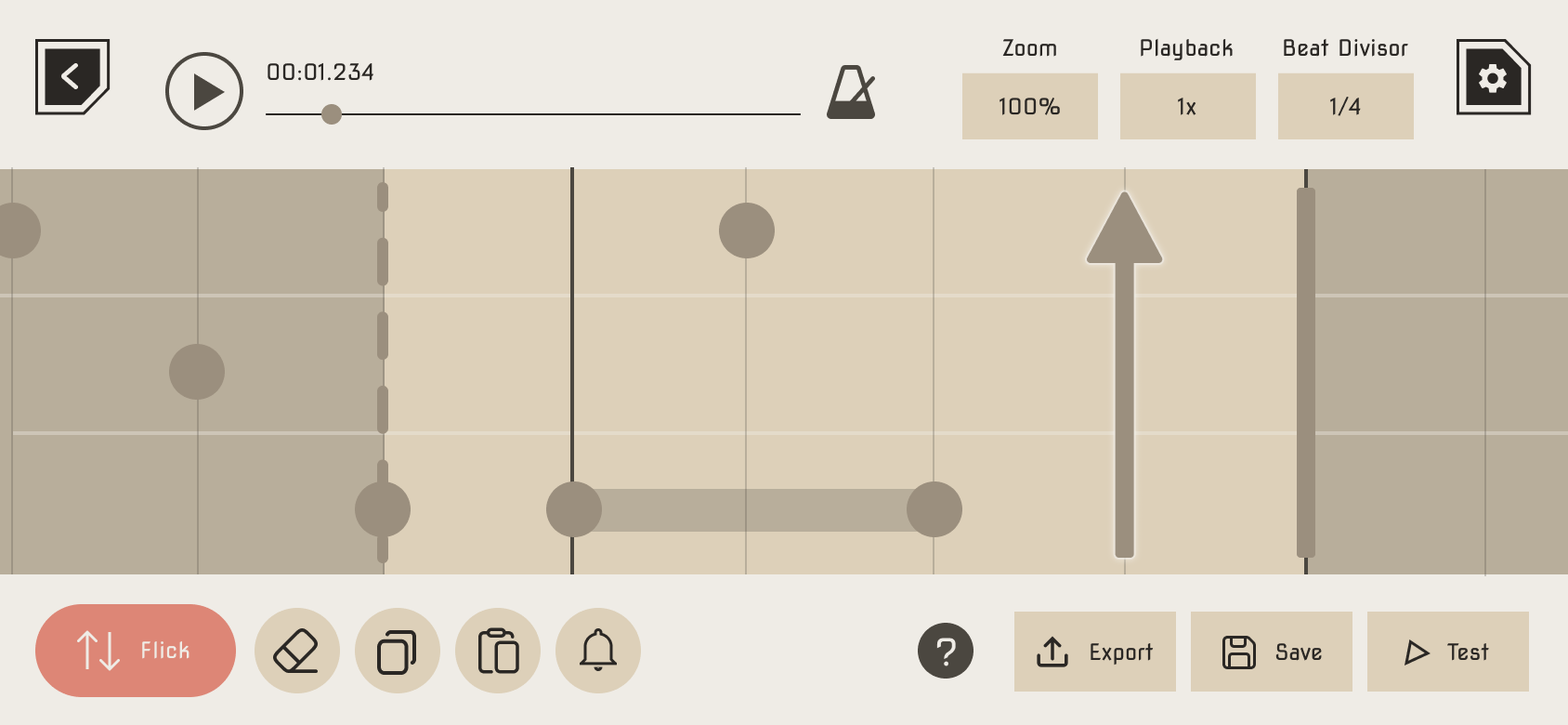
Ongawa offers an in-game editor, allowing players to create custom beatmaps with AI-powered generation tools. The AI analyzes a selected music track, creating a rhythm pattern for the player to refine and adjust. Additionally, the editor includes a dialogue generation feature, which integrates character conversations into custom levels, enhancing the narrative experience.
Social Platform with Community Beatmaps
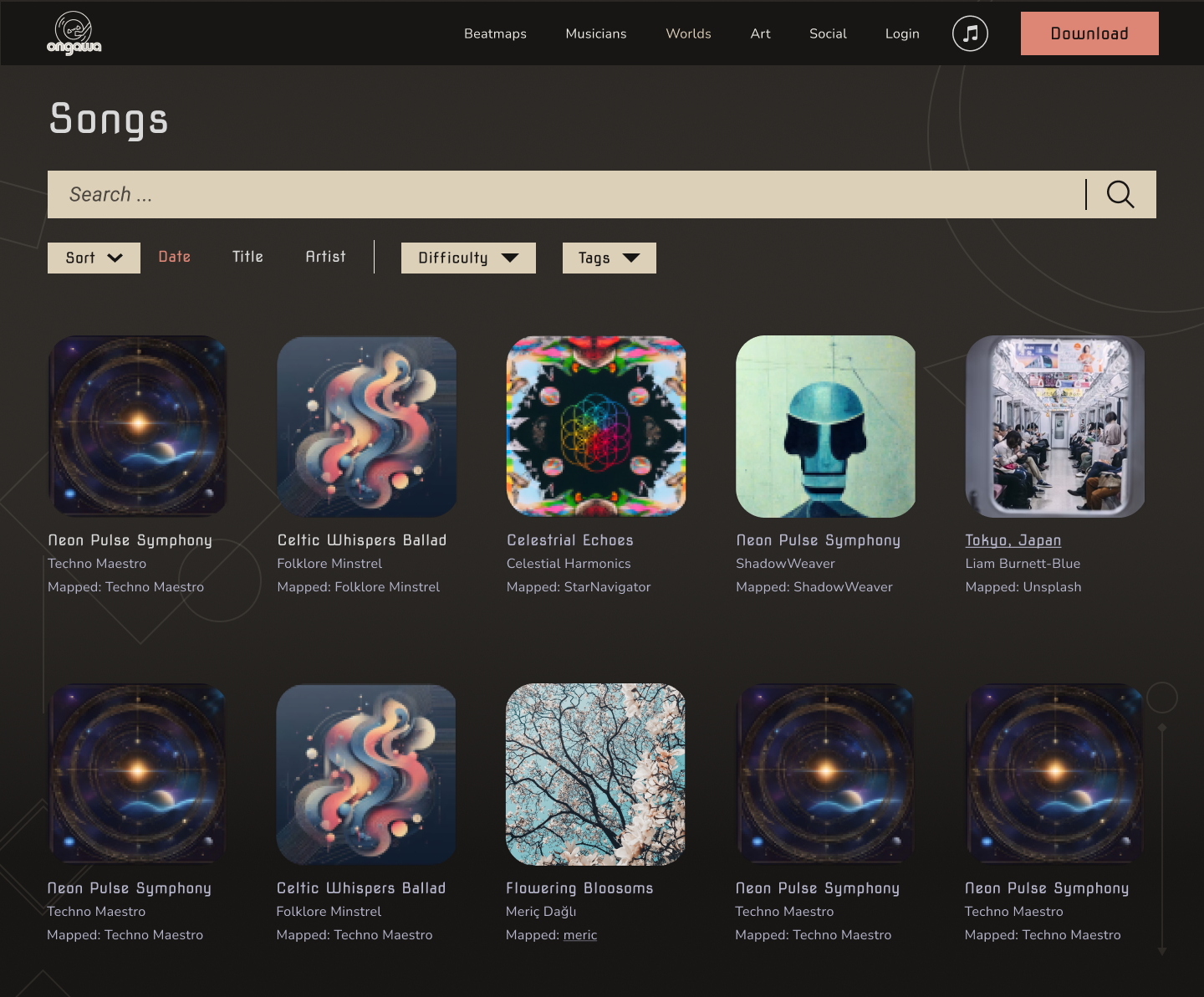
Ongawa online platform offers a space for players to access and share beatmaps created by the community. Players can browse through an extensive library of user-generated content, discover new tracks, and explore musician profiles for additional context. The website also hosts community discussions, allowing fans and players to connect, share strategies, and collaborate on new creations.
Visual and Artistic Integration
The art direction in Ongawa is designed to reflect the diverse genres and moods of music through distinct and immersive visual styles. Each environment is crafted to enhance the emotional and thematic experience of the songs players interact with.
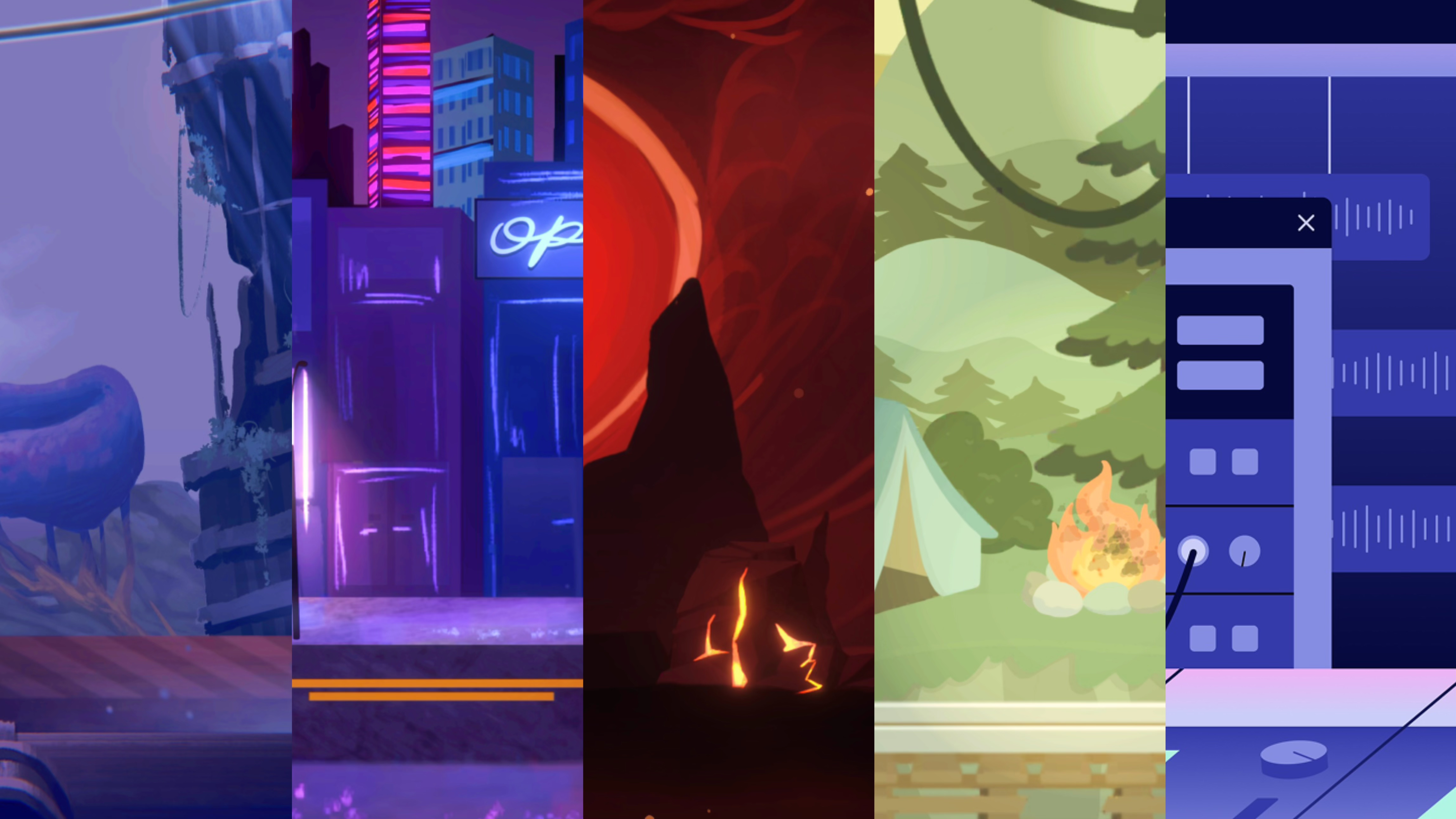
For example, a post-apocalyptic world evokes an ethereal, desolate atmosphere perfect for genres like Ambient or Post-rock, immersing players in a hauntingly beautiful landscape.
In contrast, a barren wasteland under a menacing crimson sky, dominated by an all-seeing dragon eye, amplifies the intensity of genres like Hard Rock or Metal.
Ongawa’s dynamic visuals, blending vibrant design with musical storytelling, allow players to explore rich, genre-inspired worlds that evolve with the rhythm and tone of each track. This fusion of art and music creates an engaging, narrative-driven rhythm game unlike any other.
Business Model
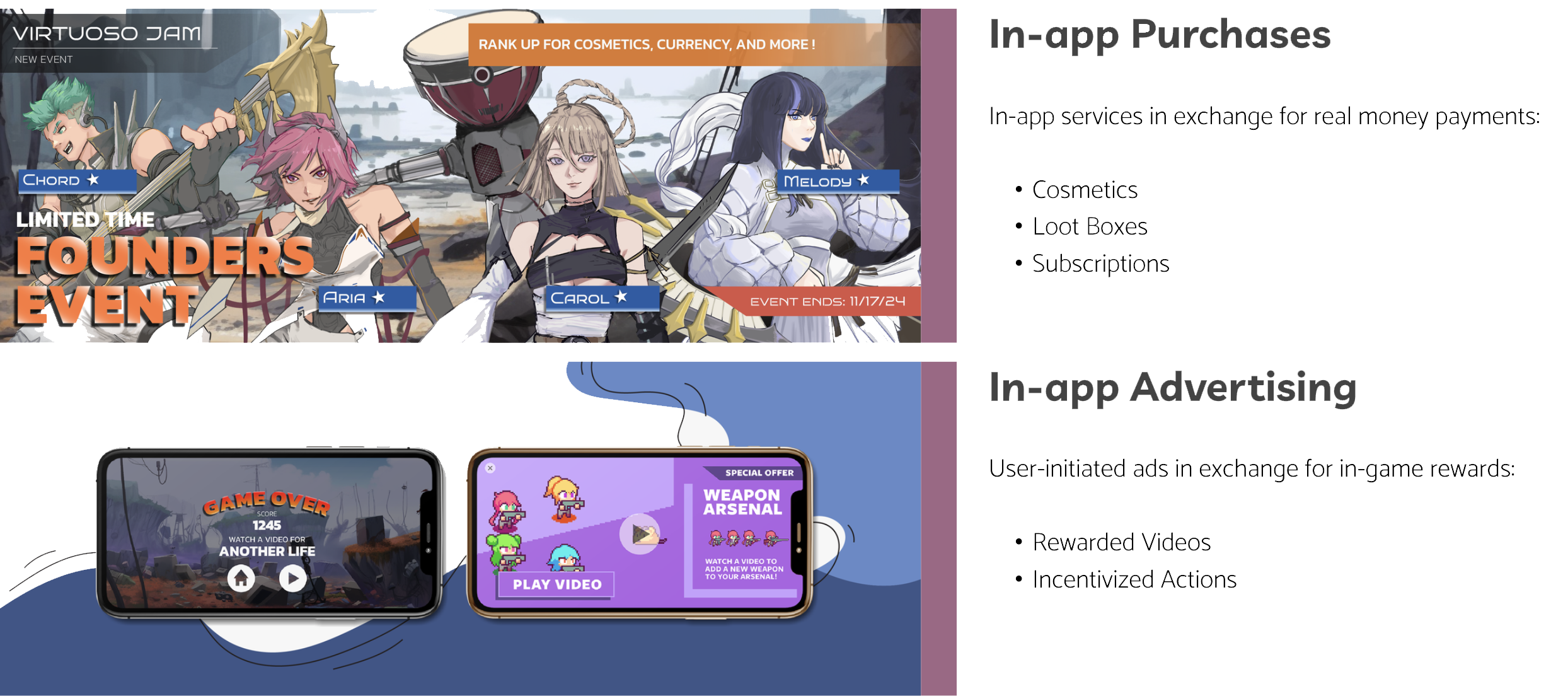
Ongawa adopts a Free-to-Play model with monetization strategies including:
- In-App Purchases: Cosmetics, loot boxes, and subscriptions offering premium content.
- Rewarded Ads: Optional ad views for in-game bonuses, ensuring non-intrusive monetization.
- Musician Revenue Sharing: Musicians earn through streams, album sales, and event-driven cosmetics.
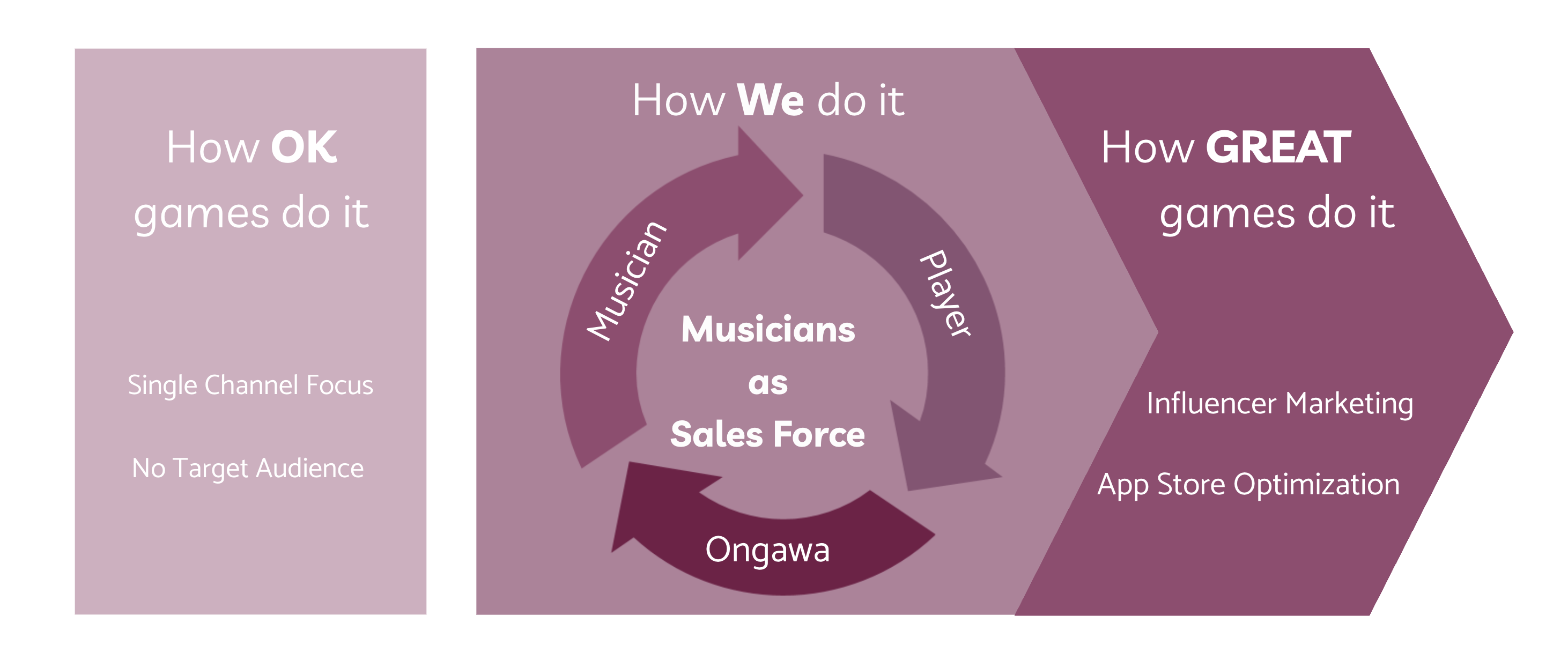
Musician-Focused Revenue Streams: Unlike other platforms where indie musicians earn almost nothing from streaming, Ongawa provides musicians with direct revenue opportunities. Musicians earn per stream when players play their created game levels. This creates a no-risk platform where musicians can become active promoters—aligned with their own financial interests.
A musician’s existing fanbase becomes their marketing force. When musicians promote Ongawa to their followers (who already love their music), they drive engaged, targeted players to the platform. This dramatically reduces player acquisition costs while building a more committed community.
Creating game levels serves as a perfect alternative to traditional music videos—a musician can upload their track and let the AI editor generate a playable level in minutes, then share it with fans who can now experience their music interactively.
Team Structure
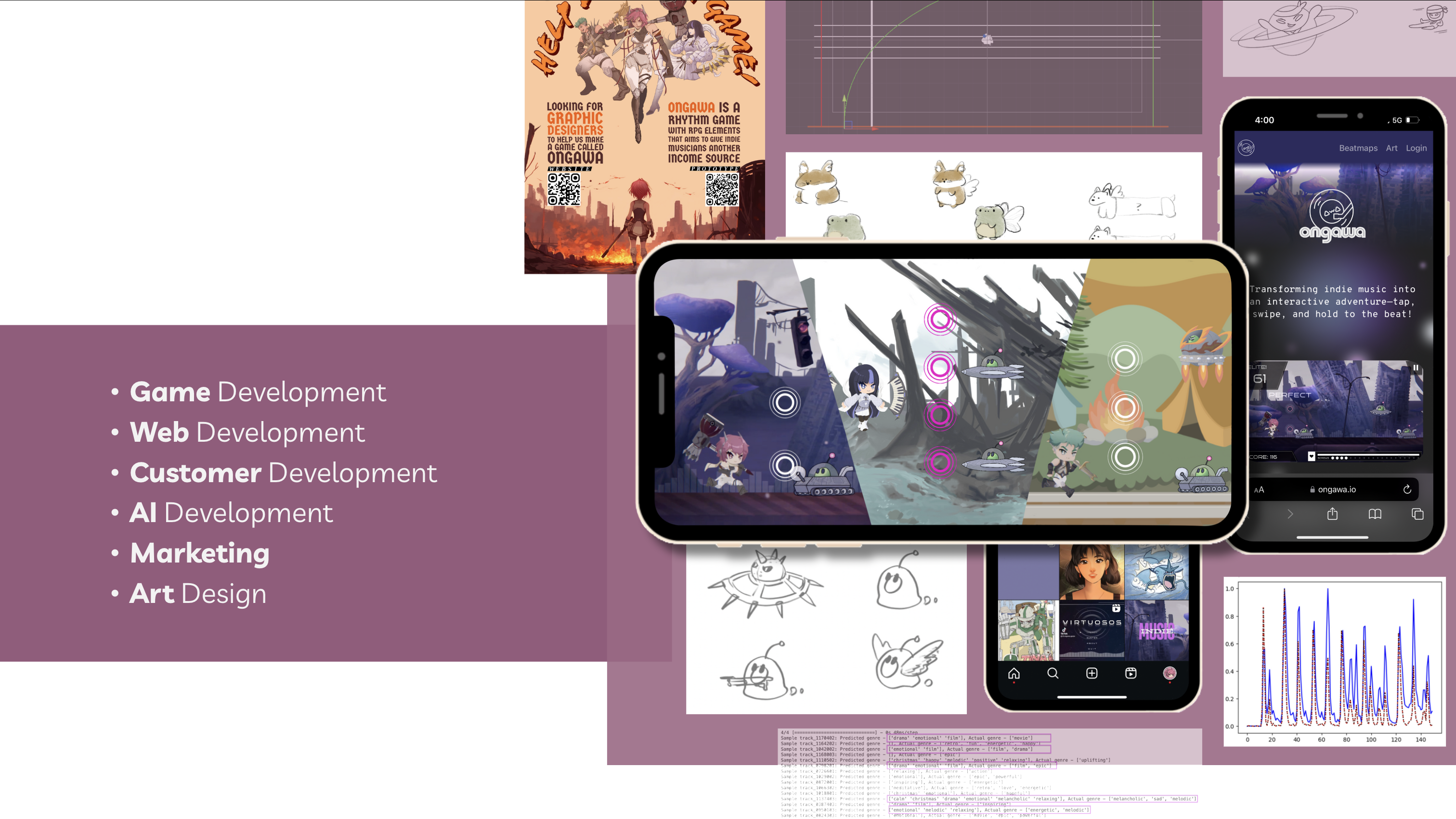
Leadership
- Lucas Li (CEO and Co-founder)
Game
- Gameplay: Annie Fanelli, Josh Levin, Tymon Vu
- Editor: Brett Hickman, Justin Scabarozi
Web
- Frontend: Jin Wu, San Tran, Thien An Tran
- Backend: Parth Patel, Tyler Baxter
AI
- Belal Elshenety, Ben Geil, Tyler Hlaing, Krishan Patel
Art
- Illustration: Connie Xian, Xia Webster, Sophia Chang, Coby Chuang
- UI/UX: William Yi
Business
- Customer Development: Jeremy Tai, Josh Harkey, Kathryn Phan
- Marketing: Pedro Talavera, Laura Zhu